

EAA Methodology
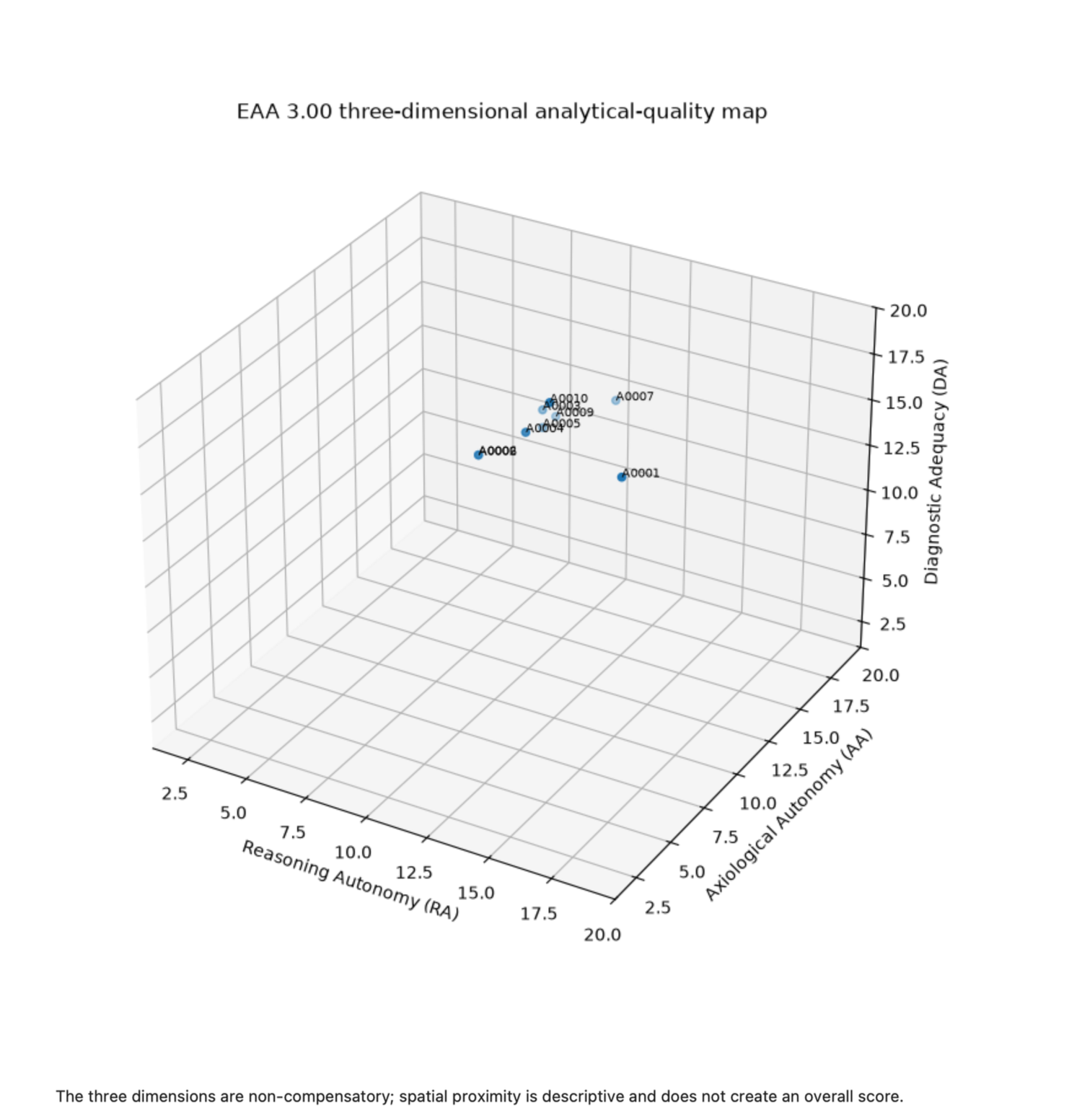
EAA is built on a proprietary three-dimensional conceptual framework for analytical quality, centred on Reasoning Autonomy, Axiological Autonomy, and Diagnostic Adequacy. These dimensions capture distinct and non-substitutable aspects of analytical performance: whether judgement is inferentially warranted, sufficiently independent of normative determination, and substantively adequate to the phenomenon being analysed.
That conceptual framework is operationalised through a distinctive proprietary methodology that converts complex qualitative judgement into a structured, rule-governed and reproducible assessment process. Defined analytical targets, task-sensitive criteria, controlled decision rules, score bands, evidentiary requirements, confidence states and audit procedures allow EAA to identify where analysis is strong, where it is vulnerable, and how different dimensions of analytical quality combine within a text.
AMD Methodology
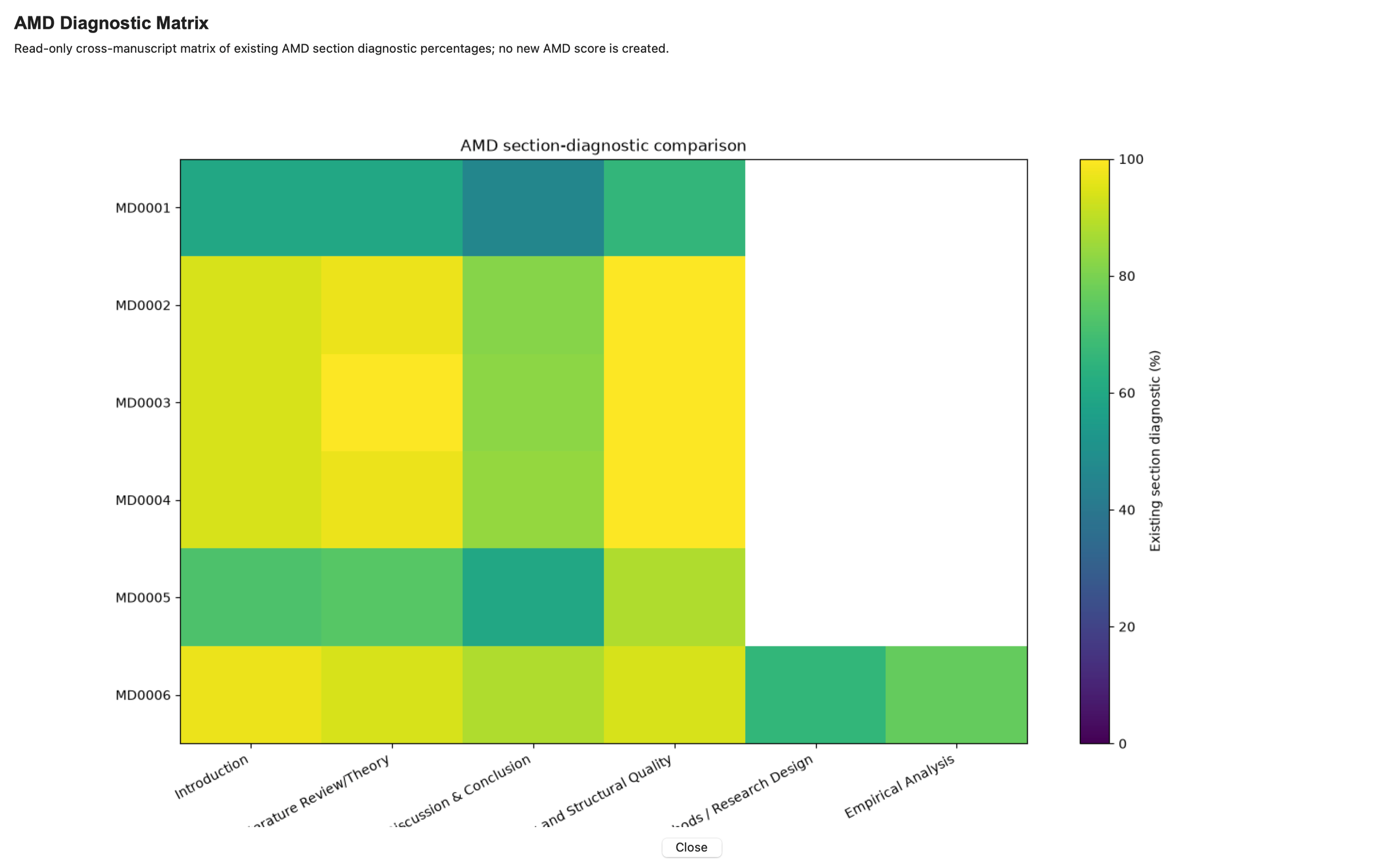
AMD is built on a proprietary route-sensitive diagnostic framework for manuscript functional performance. Its central principle is that scholarly manuscripts should be assessed according to the functions required by the particular form of academic work they undertake. Conceptual articles, literature reviews, empirically informed or interpretive work, embedded empirical studies and full empirical research therefore should not all be judged against the same template. AMD first establishes the manuscript’s scholarly route and then assesses how effectively the relevant scholarly functions are performed within the diagnostic scope appropriate to that form of knowledge production.
This framework is operationalised through a distinctive proprietary methodology built around stable functional-performance constructs, family-sensitive criteria, structured observation and classification, locked assessment contracts, route-specific scoring, deterministic finalisation, and reproducibility and audit controls. The result is a structured diagnosis of strengths, weaknesses and development priorities in manuscript functional performance that can support comparison and institutional learning across comparable scholarly works.
ATC uses AI within a predefined methodological architecture rather than allowing AI to determine the framework, standards or assessment logic. Learn more about where AI enters the process and the safeguards governing its use.
Contribute to the Development of ATC
Interested in exploring ATC beyond the standard free trial? Through our ATC Joint Development Programme, selected individual and institutional users can test EAA, AMD or both modules on a structured batch of real analytical or scholarly work, provide substantive written feedback, and receive a complimentary two-month licence for the module or modules successfully tested. Participation is selective and available once per customer.
Click the button below to learn more about the ATC Joint Development Programme and apply to participate.