

Academic Manuscript Diagnostic
Academic Manuscript Diagnostic services are designed for research institutes, university-based and non-university research centres, academic departments, doctoral and early-career researcher programmes, scholarly publication series, and academic publishers.
The purpose is to diagnose academic manuscripts as scholarly objects: what form they take, how they produce knowledge, which review route they require, how their sections function, how evidence and methodology are organised, and where revision would most improve coherence, clarity, and publication readiness.
AMD is not an extension of Expert Analysis Assessment. It is a separate manuscript-focused diagnostic stream with its own protocol, taxonomy, denominator profiles, question-routing logic, structured results, audit log, anchor ecology, recalibration logic, and user guide.

Manuscript Diagnostic Review
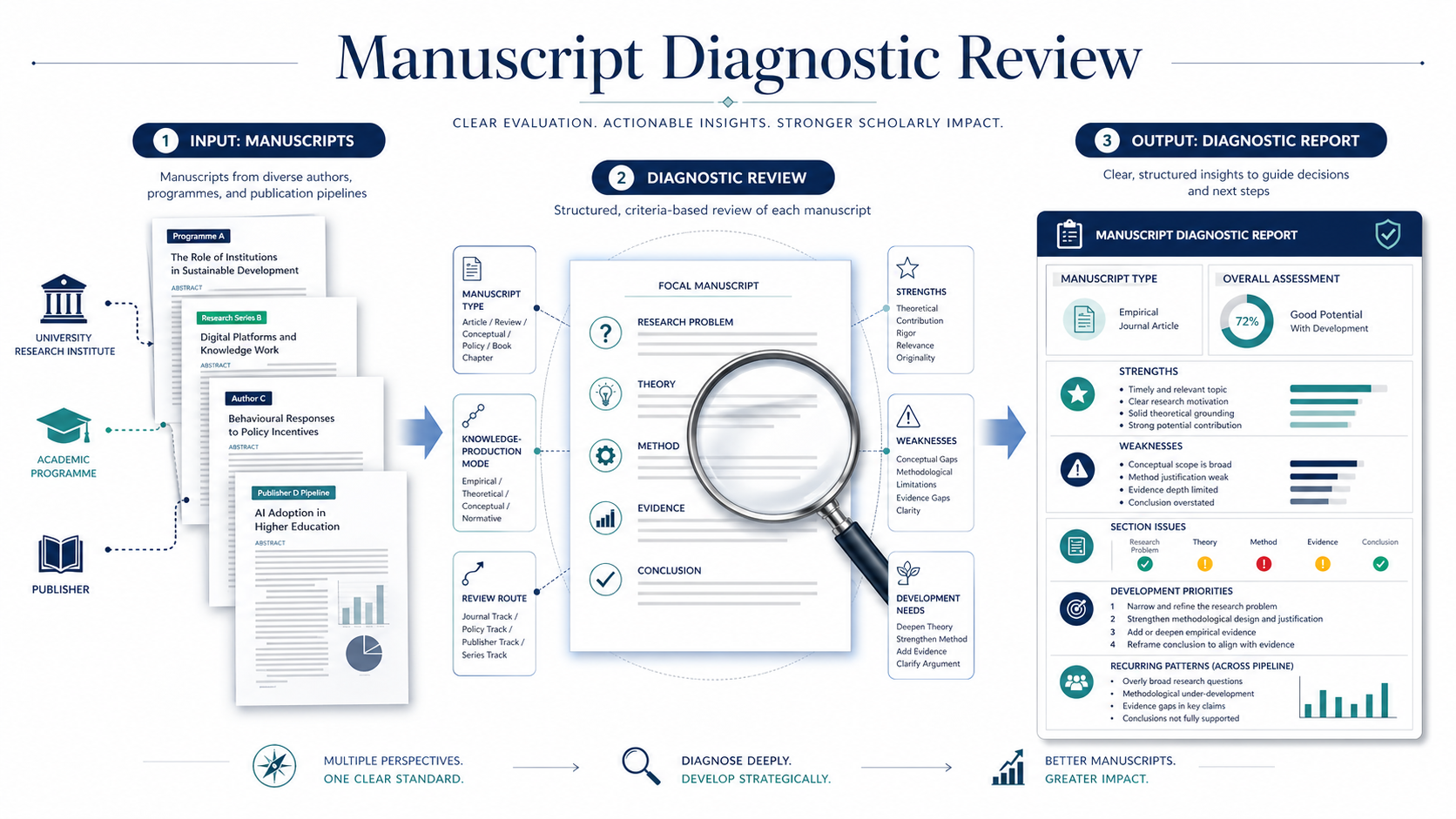
A structured diagnostic review of academic manuscripts across authors, series, programmes, or publication pipelines.
The review identifies manuscript type, knowledge-production mode, review route, section-level strengths and weaknesses, route-specific development needs, reproducibility status, and recurring patterns across a body of work. It is designed to show how a manuscript works as a scholarly object: whether it is conceptual, review-synthetic, empirically informed, embedded-design, or fully empirical; whether its sections perform the functions expected of them; and where revision would most improve coherence, methodological clarity, evidentiary use, and publication readiness.
It is not a copy-editing service, language-polishing exercise, ordinary peer review, journal acceptance prediction, or judgement on the substantive truth of the manuscript’s findings. Its function is narrower and more systematic: to provide a structured diagnostic map of manuscript form, logic, strengths, weaknesses, and development priorities.
The AMD guide gives the same boundary: AMD is not a generic writing coach, proofreader, truth-verification engine, or acceptance predictor; it diagnoses the manuscript as a scholarly object by form, route, evidence architecture, design transparency, conceptual coherence, empirical execution, closure, and writing quality.
The review examines:
publication form — journal article, book chapter, or other academic manuscript;
knowledge-production mode — conceptual, review-synthetic, empirically informed, embedded-design, empirical with clear methodology, or mixed/unclear;
review route — full empirical, reduced empirical-informed, reduced conceptual, reduced review-synthesis, embedded empirical reduced, hybrid reduced, minimal, or contested;
genre family and denominator profile;
section-level performance;
question-routing profile;
evidence architecture and design strength;
packet coherence, denominator alignment, and scope-note alignment;
reproducibility status and drift;
recurring manuscript-development needs across the corpus.
The AMD protocol formalises a three-axis manuscript ontology: publication form, knowledge-production mode, and review route. These axes determine denominator profile, question routing, audit stance, and anchor family.
-
Structured diagnostic review of academic manuscripts across authors, programmes, series, or publication pipelines using AMD’s manuscript taxonomy, question-routing logic, denominator-sensitive assessment, section-level scoring, reproducibility checks, and audit packets.
-
A manuscript diagnostic dataset and interpretive report identifying manuscript types, knowledge-production modes, section-level strengths and weaknesses, development priorities, route-specific issues, and recurring patterns across the reviewed corpus.
-
A clearer institutional understanding of manuscript quality, publication-readiness challenges, recurring development needs, and the kinds of support required across researchers, editors, programmes, or publication streams.
“Manuscript quality becomes developable when its structure becomes visible.”
Tailored Manuscript Development Workshop
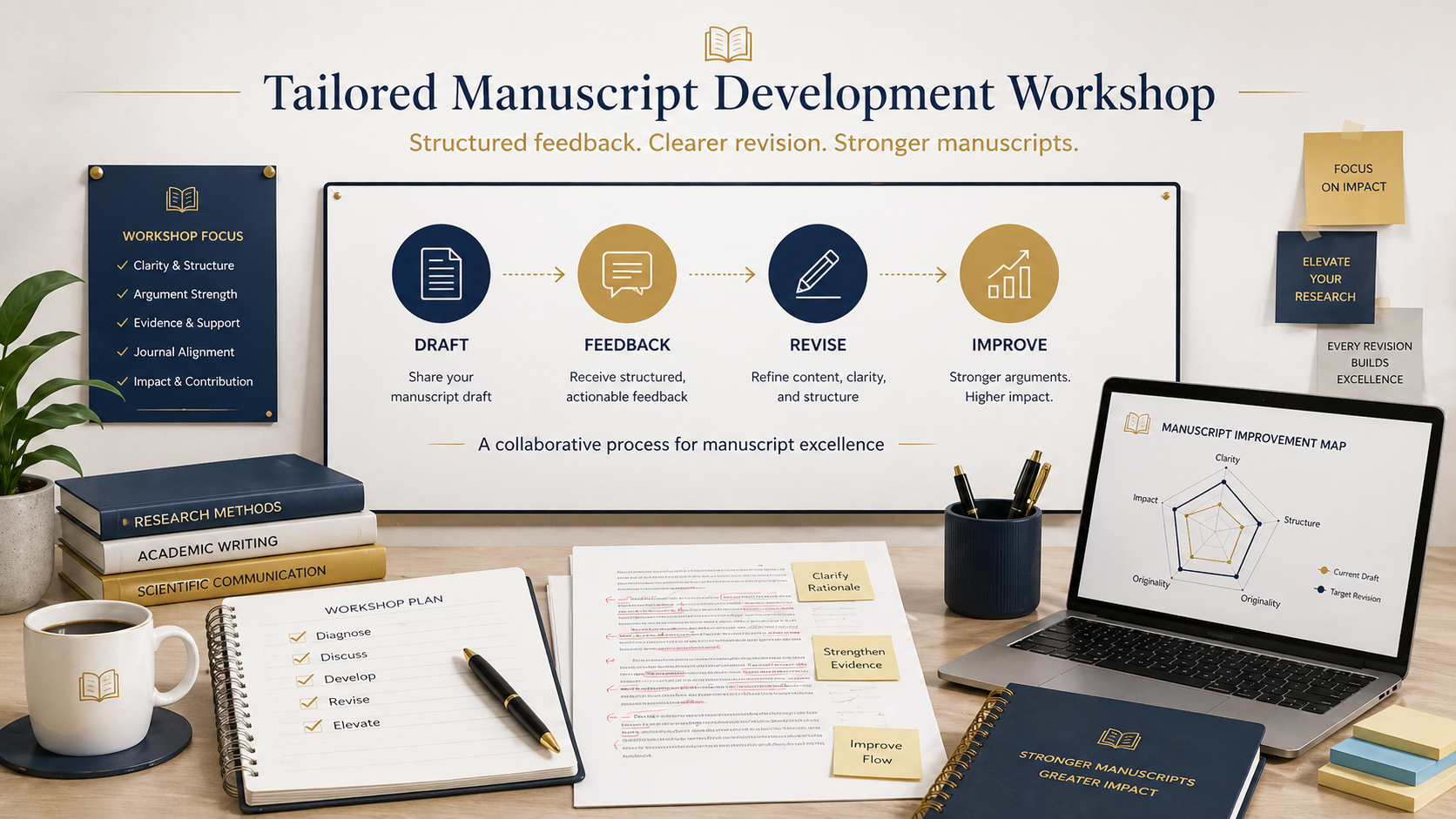
A bespoke workshop built around AMD findings.
This workshop helps researchers, editors, doctoral programmes, research teams, or academic departments address concrete manuscript-level issues. It translates diagnostic findings into practical revision knowledge: how to improve structure, strengthen argumentation, clarify method, align evidence with claims, and develop stronger publication-ready outputs.
The workshop can focus on:
research problem formulation;
article or chapter architecture;
conceptual framing;
literature positioning;
theory and framework development;
methodological transparency;
case-selection and data/source logic;
empirical organisation;
evidence-to-claim linkage;
discussion and conclusion structure;
genre fit and review route;
differences between conceptual, empirically informed, embedded-design, and fully empirical manuscripts.
The workshop is not generic academic-writing training. It is built around diagnosed manuscript patterns and the specific weaknesses visible in the reviewed corpus.
-
A bespoke workshop designed around the results of a Manuscript Diagnostic Review and focused on recurring manuscript-development needs.
-
A targeted workshop programme with manuscript examples, diagnostic categories, revision priorities, and applied exercises.
-
Stronger manuscript-development capacity, clearer understanding of scholarly structure, and improved ability to revise manuscripts in line with their actual genre, mode, and review route.
“Manuscript development improves when feedback becomes structured rather than impressionistic.”
Editorial and Review System Development
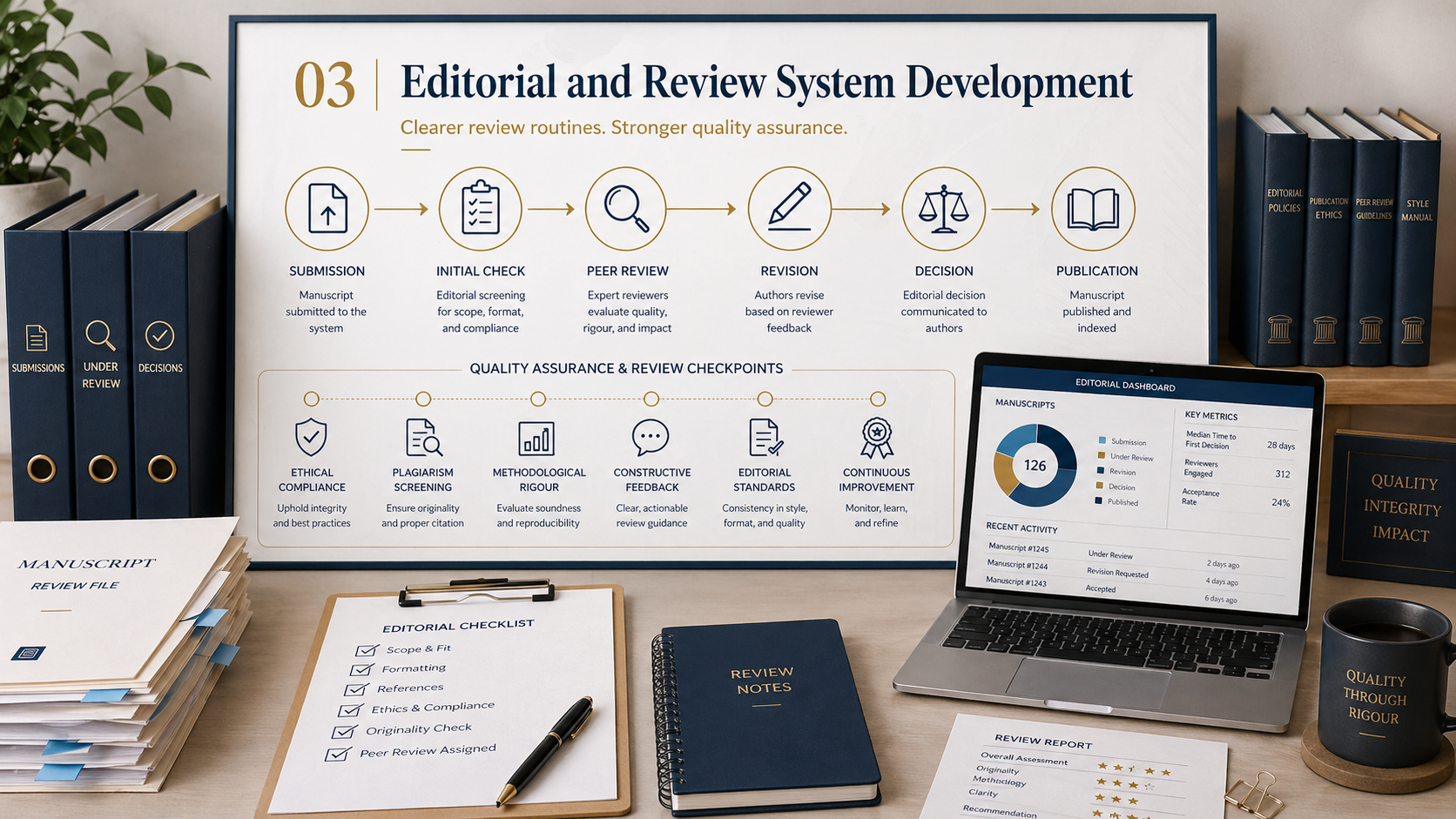
A service for research institutes, academic programmes, and publishers seeking to strengthen their internal manuscript-review and quality-assurance processes.
Many institutions rely on informal manuscript feedback, uneven supervision, inconsistent editorial judgement, or unstructured internal review. Editorial and Review System Development helps institutions move toward clearer review criteria, more transparent feedback routines, and more reproducible manuscript-assessment practices.
This service can support:
internal manuscript-review frameworks;
diagnostic review templates;
editorial quality-assurance routines;
review criteria for publication series;
doctoral or early-career manuscript-development systems;
publisher-facing manuscript triage and development workflows;
institutional feedback standards;
corpus-level monitoring of recurring manuscript weaknesses;
alignment between review routines and publication strategy.
It is especially useful when manuscript quality is treated as an institutional responsibility rather than only as an individual author’s task.
For research institutes and academic programmes, it can help make supervision, mentoring, internal review, and publication preparation more consistent across researchers and cohorts.
For publishers, it can support clearer manuscript triage, more transparent developmental feedback, and stronger alignment between editorial judgement, series standards, and publication strategy.
-
Review and development of internal manuscript-assessment routines, feedback templates, review workflows, diagnostic categories, and quality-assurance practices.
-
A structured editorial or institutional review framework, including recommended review routines, diagnostic criteria, workflow guidance, and links to AMD-supported assessment where relevant.
-
More transparent manuscript review, more consistent feedback, better author-development routines, and stronger internal capacity to manage manuscript quality across programmes, series, or publication streams.
“Good review systems do not only judge manuscripts; they help institutions learn from them.”
Analysis Typology Coder | Academic Manuscript Diagnostic
A specialised software-supported environment for structured manuscript diagnosis.
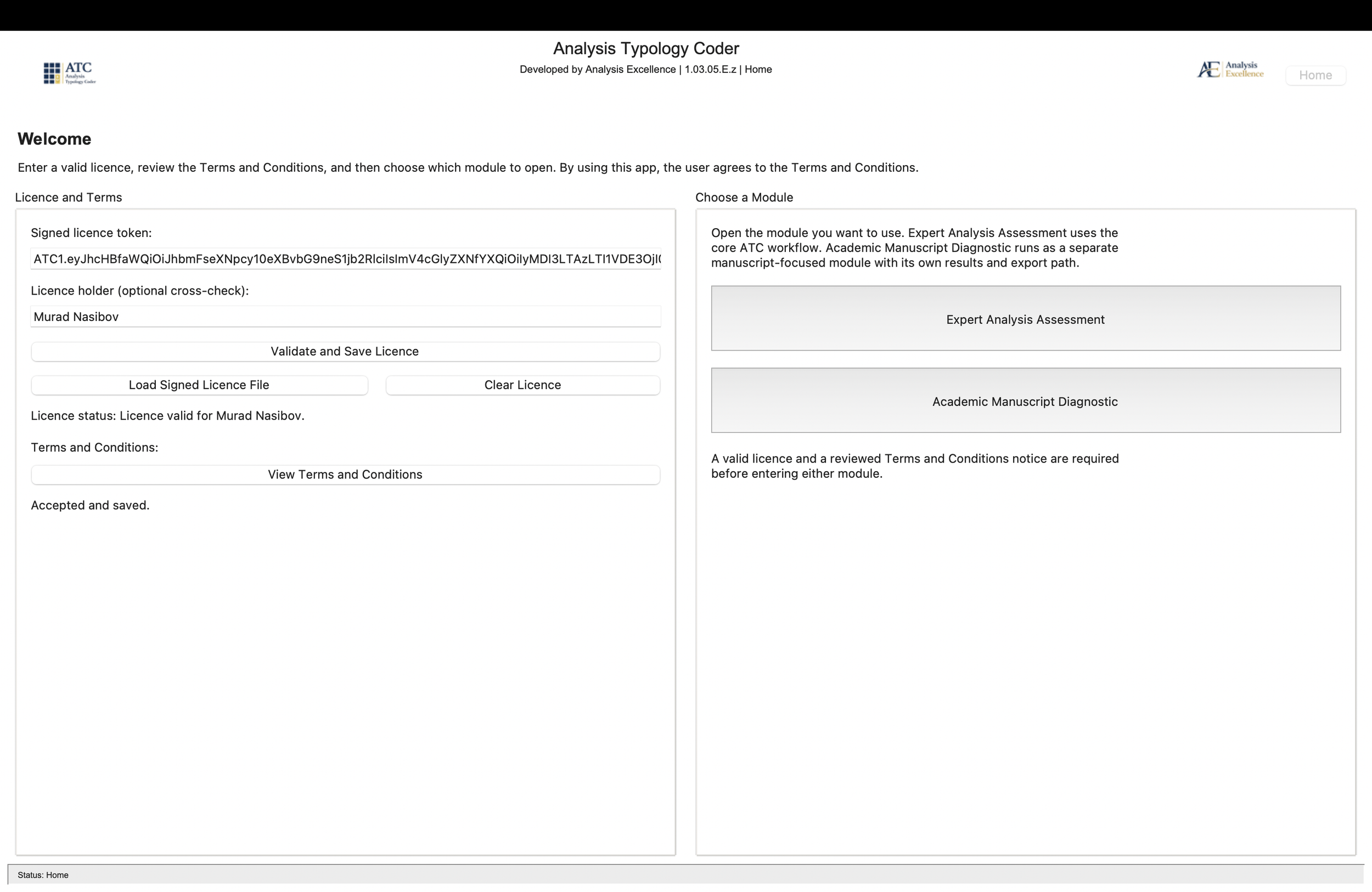
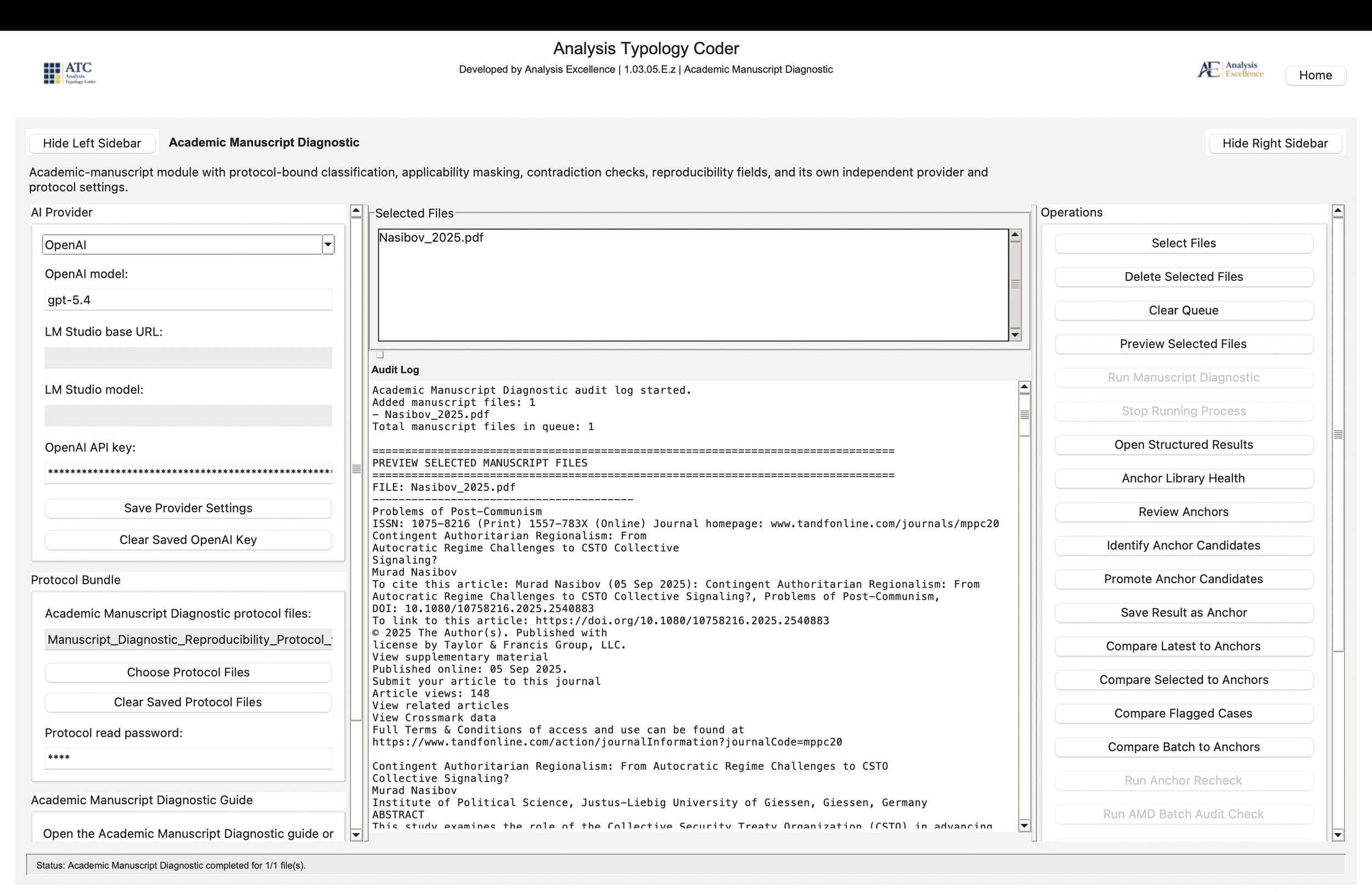
The Academic Manuscript Diagnostic module of Analysis Typology Coder helps institutions review academic manuscripts in a more systematic, transparent, and reproducible way. It is designed for research institutes, academic programmes, doctoral and early-career researcher schemes, publication series, and academic publishers that work with manuscripts regularly and need a clearer way to understand their quality, structure, and development needs.
The module does not replace scholarly judgement, editorial responsibility, supervision, or peer review. Its role is different. It gives those forms of judgement a more structured basis by showing how a manuscript works as a scholarly object: what kind of manuscript it is, how it builds its argument, how its sections function, how it uses theory and evidence, how clear its methodology is, and where revision would most improve the text.
Unlike a generic writing tool, AMD does not simply summarise a manuscript or offer broad stylistic advice. It diagnoses the manuscript according to its actual form and purpose. A manuscript with a clear research design is assessed through more demanding expectations of method, evidence, analysis, and claims, while a conceptual article or an evidence-rich but method-light chapter is not forced into the same category. This makes the review more precise and fairer to different kinds of scholarly work.
AMD can be used to review individual manuscripts, but its greater value appears when it is used across a wider body of work. Over time, it helps institutions see recurring manuscript-development patterns: weak research questions, unclear contribution claims, underdeveloped theoretical framing, insufficient methodological transparency, uneven evidence-to-claim linkage, weak discussion sections, or inconsistent publication readiness. These patterns can then inform workshops, internal review routines, author support, editorial strategy, and long-term scholarly development.
The module enables users to:
process academic manuscripts in a structured way;
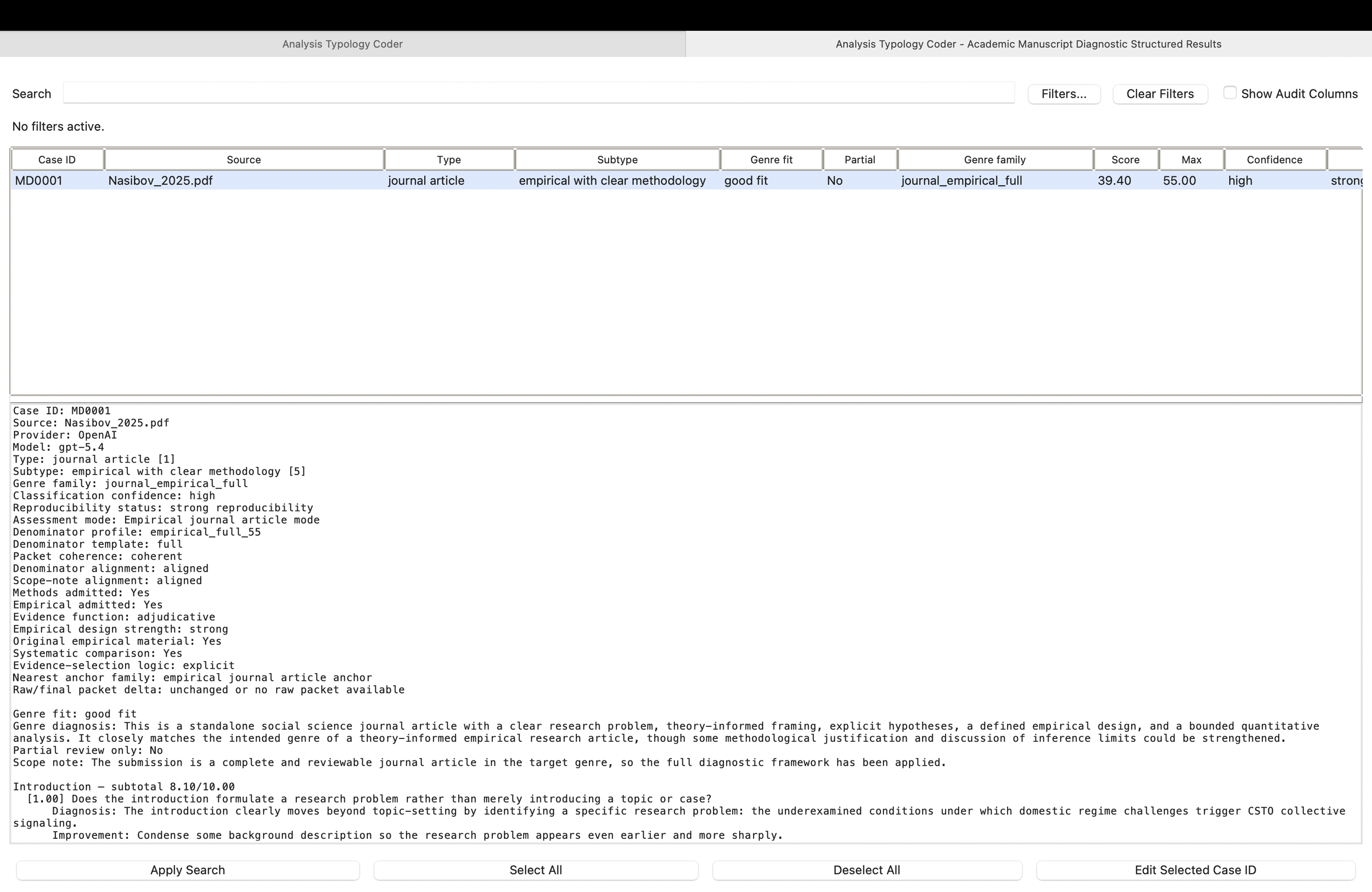
generate consistent diagnostic results;
identify manuscript type and review needs;
review section-level strengths and weaknesses;
compare manuscripts across authors, programmes, series, or publication pipelines;
detect recurring development problems;
create structured datasets and reports;
support internal review, training, and quality-assurance processes.
For research institutes and academic programmes, AMD can support more consistent supervision, mentoring, manuscript development, and publication preparation. For publishers, it can support manuscript triage, developmental feedback, series-level quality monitoring, and clearer editorial standards. For both, it turns manuscript review from a largely impressionistic process into a more structured and institutionally usable form of diagnosis.
Licensing note
The Academic Manuscript Diagnostic module can be licensed individually as a standalone module within the ATC app. Institutions that also produce expert analytical outputs may license AMD together with the Expert Analysis Assessment module in one integrated ATC installation. Organisations focused only on academic manuscripts do not need to license EAA.
Licensing can be accompanied by onboarding, user guidance, and training. Implementation support can also help institutions interpret AMD results, develop internal review routines, use diagnostic datasets, and connect manuscript assessment to training, editorial work, or publication strategy.
-
Licensed access to the Academic Manuscript Diagnostic module of Analysis Typology Coder, with onboarding and training for structured manuscript review. Optional support can help institutions integrate AMD into manuscript-development, internal review, editorial, or quality-assurance workflows.
-
A licensed manuscript-diagnostic system that produces structured results, diagnostic reports, review records, exportable datasets, and guidance for manuscript development and institutional learning.
-
More consistent and transparent manuscript diagnosis; stronger internal review capacity; clearer author-development routines; and a more systematic basis for improving manuscript quality over time.
“Scholarly judgement becomes more useful when it is supported by diagnostic structure.”
Scholarly Excellence Partnership
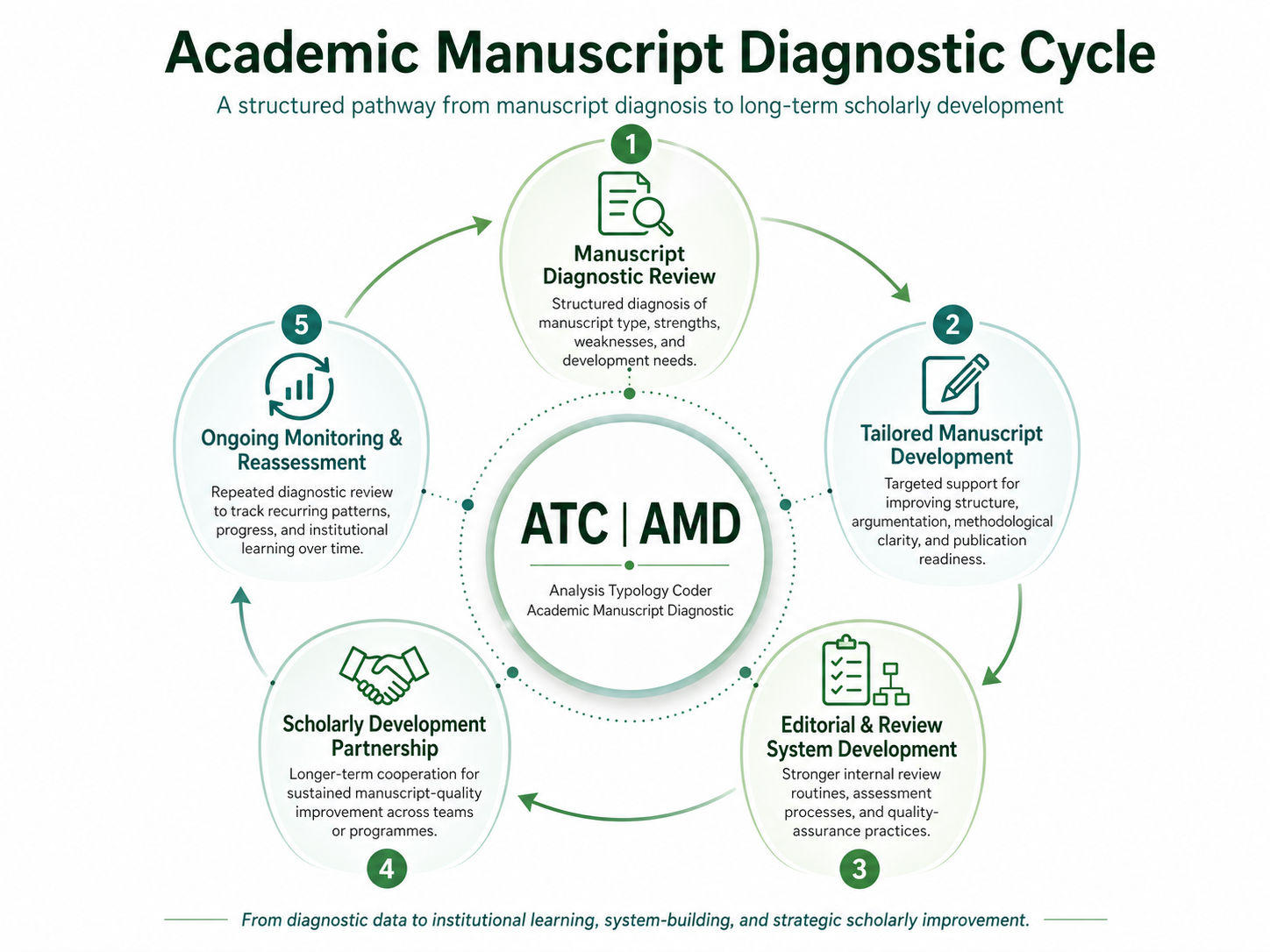
A longer-term cooperation for institutions seeking to improve manuscript quality strategically across authors, teams, programmes, series, or editorial processes.
The Scholarly Development Partnership is designed for institutions that want to treat manuscript quality not as an occasional problem of individual authors, but as an institutional capability. It connects manuscript diagnostic review, tailored development workshops, editorial and review-system design, software-supported monitoring, and strategic interpretation of manuscript-development data.
This service is particularly relevant for research institutes, academic departments, doctoral and early-career researcher programmes, publication series, and academic publishers that work with a recurring flow of manuscripts. In such contexts, manuscript quality is rarely only a matter of one text. It often reflects recurring patterns: unclear research problems, weak literature positioning, underdeveloped conceptual frameworks, insufficient methodological transparency, uneven evidence-to-claim linkage, poor discussion structure, or inconsistent internal review practices. The partnership helps institutions recognise these patterns and build systems to address them over time.
The partnership may include:
regular Manuscript Diagnostic Reviews;
longitudinal interpretation of AMD datasets;
tailored manuscript-development workshops;
diagnostic support for doctoral and early-career researcher programmes;
development of internal manuscript-review frameworks;
editorial or publication-series quality-assurance routines;
review templates and manuscript-development criteria;
training for researchers, editors, reviewers, or programme leaders;
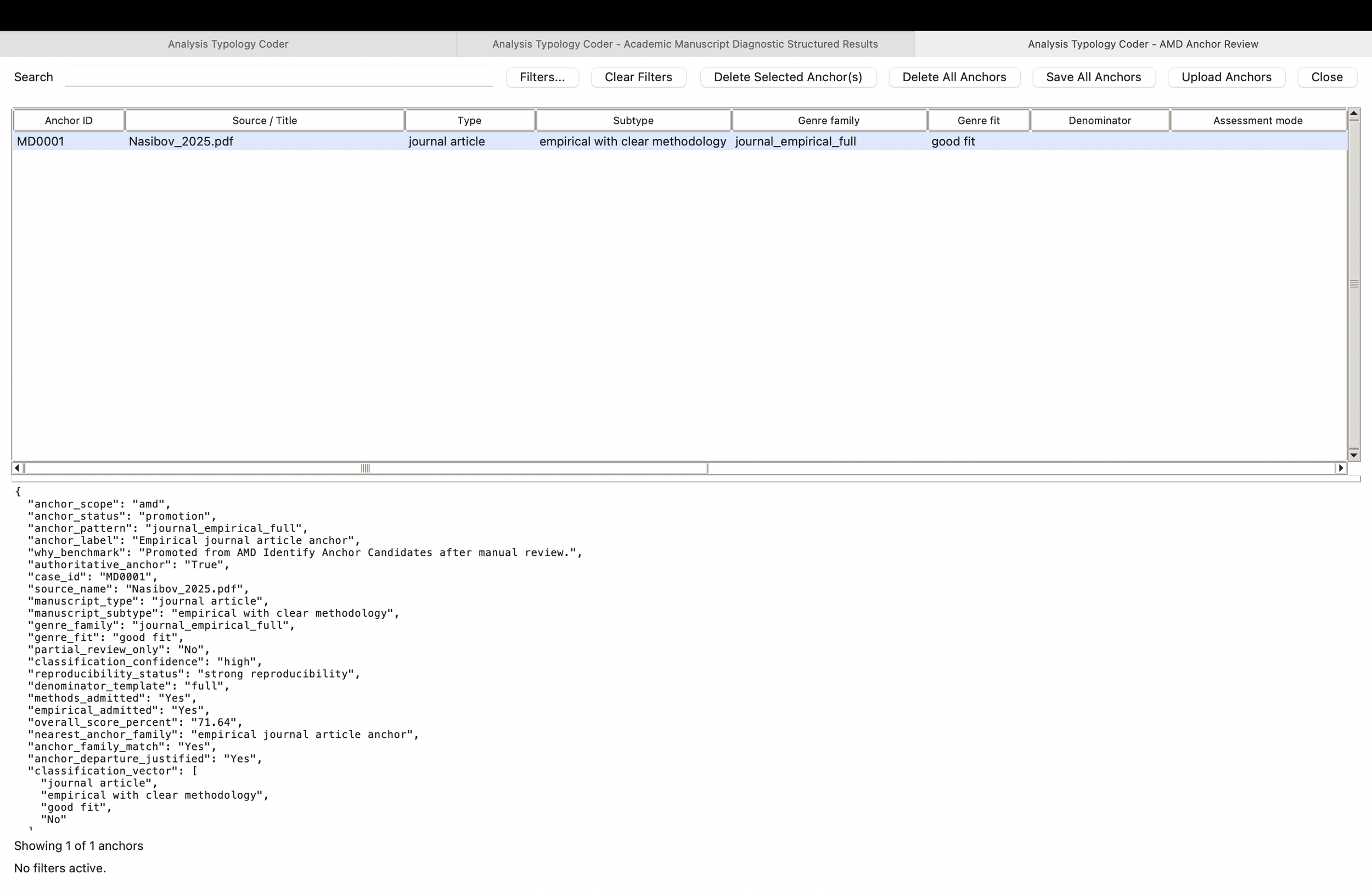
anchor-family and benchmark-corpus development;
reproducibility and recalibration review;
guidance on manuscript triage and developmental feedback;
strategic interpretation of recurring manuscript weaknesses;
alignment between manuscript development, publication strategy, and institutional goals.
The Scholarly Development Partnership helps institutions move from isolated manuscript feedback toward a more coherent system of scholarly development. Instead of repeatedly addressing similar problems manuscript by manuscript, institutions can identify where those problems arise, how frequently they recur, which author groups or publication formats are most affected, and what forms of support are likely to have the strongest developmental effect.
For research institutes and academic programmes, the partnership can strengthen supervision, mentoring, internal review, and publication preparation. For publishers, it can support clearer manuscript triage, stronger developmental feedback, more consistent series standards, and better alignment between editorial judgement and long-term publication strategy.
-
A long-term institutional cooperation supporting manuscript-quality development, review-system improvement, and strategic use of AMD diagnostic evidence.
-
Strategic advisory support, regular manuscript diagnostic reviews, tailored development workshops, internal review frameworks, manuscript-quality indicators, diagnostic templates, and leadership-level interpretation of AMD data.
-
Manuscript quality becomes an institutional capability rather than a one-off revision problem, supported by clearer standards, better review systems, stronger author development, and sustained scholarly improvement.
“Scholarly excellence becomes durable when manuscript development is treated as an institutional system.”